Black Coffee and the Long Road to Drinking It Without Flinching
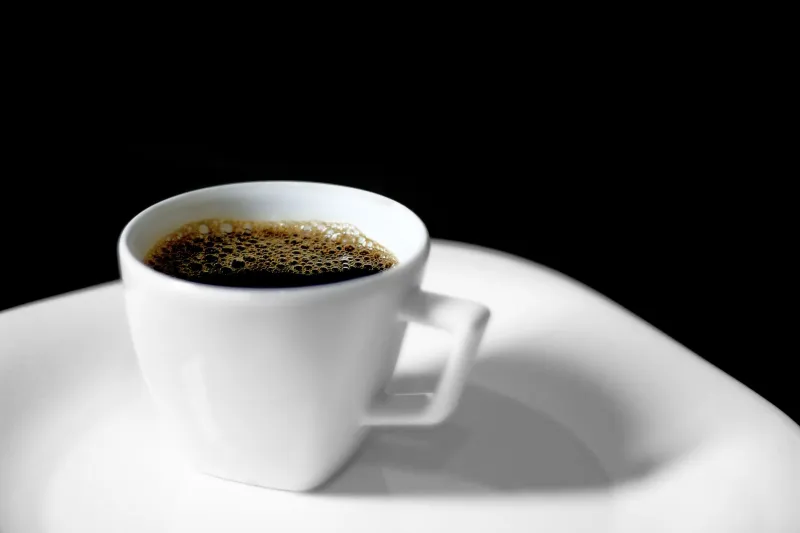
The first time most people try black coffee, they don't like it. That's not an insult — it's just physiology. Coffee is bitter, and humans are evolutionarily wired to treat bitter as a warning sign. We learned to tolerate it, then to want it, then to need it. But appreciating it? That took a whole cultural movement and about thirty years.
America's relationship with coffee is one of the stranger arcs in food history. We're one of the largest coffee-consuming nations on earth, and for most of that history, we've been drinking it wrong — at least according to the people who grow, roast, and obsess over it. The diner drip. The bottomless cup. The coffee-flavored milk drink that took over every strip mall in the country. We didn't drink coffee so much as we drank the idea of coffee, heavily modified to taste like something else entirely.
That's changing. And the story of how it changed says a lot about taste, culture, and what we mean when we say we've acquired a preference for something.
The Era of the Bottomless Cup
To understand where we're going, it helps to understand where we've been. For the better part of the twentieth century, American coffee culture was defined by volume, not quality. Percolated, then drip-brewed, served in ceramic mugs at diners and truck stops across the country, coffee was functional. It got you going. Nobody was sitting around parsing the tasting notes.
The beans were often low-grade robusta — cheaper, more caffeinated, and significantly more bitter than arabica. Roasters compensated by roasting them dark, which masked defects but created a burnt, harsh cup. Cream and sugar weren't just preferences; they were practically necessary. The coffee didn't taste good on its own, and everyone knew it, and nobody particularly cared.
Then, in the 1980s and 90s, Starbucks happened. Which is a sentence that sounds like the beginning of a coffee snob rant, but it's genuinely an inflection point. Starbucks didn't teach Americans to drink better coffee — it taught them to drink more expensive coffee, which is a different thing. The lattes, the Frappuccinos, the flavored syrups: these were still coffee as a vehicle for something sweeter and more palatable. But they planted a seed. Suddenly, coffee was an experience worth paying attention to.
The Third Wave Arrives
The term "third wave coffee" gets thrown around a lot, and it can sound precious — the kind of phrase that makes people roll their eyes and order a medium drip out of spite. But what it describes is real and worth understanding.
The third wave, which started gaining mainstream traction in the early 2000s and accelerated through the 2010s, is essentially the idea that coffee is an agricultural product with terroir — like wine or olive oil — and that the goal of roasting and brewing is to highlight the bean's natural characteristics rather than override them. Single-origin beans. Light roasts that preserve floral and fruity notes. Pour-over methods that give you control over extraction. Baristas who can tell you which farm the coffee came from and what elevation it was grown at.
Shops like Intelligentsia, Counter Culture, and Blue Bottle weren't just selling coffee. They were making an argument: that great coffee, properly grown and carefully prepared, doesn't need anything added to it. That cream and sugar are a patch for a bad cup, not a preference.
For a lot of Americans, that argument landed like a small revolution.
What 'Acquiring a Taste' Actually Means
Here's where it gets interesting from a food science perspective. Taste preferences aren't fixed. They're plastic, shaped by exposure, context, and expectation. When you drink black coffee repeatedly in an environment that frames it as sophisticated and worth savoring, your brain starts to update its assessment. The bitterness that read as unpleasant begins to register as complexity. You're not tasting a different drink — you're tasting the same drink through a different interpretive lens.
This is the same mechanism that explains why wine drinkers learn to appreciate tannins, why beer enthusiasts come to love hoppy IPAs, and why your palate for spicy food expands the more you eat it. The signal doesn't change; the meaning assigned to it does.
Consumer trend data backs this up. According to the National Coffee Association's annual reports, the percentage of Americans drinking their coffee black has been climbing steadily, particularly among younger adults and urban consumers. Specialty coffee consumption — the category most closely associated with black coffee appreciation — has grown consistently for over a decade, even as overall coffee consumption has plateaued.
Is It Sophistication or Just a Different Habit?
This is the question worth sitting with, because there's a real risk of black coffee becoming its own kind of snobbery. The person who makes a face when you add oat milk to your latte is not more evolved — they've just swapped one set of preferences for another and decided theirs is more legitimate.
Drinking coffee black doesn't make you a better coffee drinker. It makes you someone who has developed a tolerance and appreciation for bitterness, which is genuinely interesting but not inherently superior. A well-made cortado with good milk is a beautiful thing. A flat white from a skilled barista is not a compromise. There are people who taste coffee black for the first time at a third-wave shop, find it genuinely revelatory, and never go back. And there are people who taste the same cup and think, this is fine, but I'd like some cream, please. Both responses are valid.
What the third wave actually gave American coffee culture — its real gift — isn't black coffee. It's the invitation to pay attention. To slow down, to taste deliberately, to care about what's in the cup. Whether that leads you to drink it straight or to build something more complex around it is beside the point.
The Morning Cup as a Moment
At Ada's Kitchen & Coffee, we think about food and drink as things that carry meaning beyond their ingredients. The morning coffee ritual is one of the most intimate parts of a lot of people's days — quiet, personal, sometimes the only moment before the world starts demanding things from you.
If learning to drink coffee black means you're tasting something closer to the source — the soil, the altitude, the hands that picked it — that's a meaningful shift in how you move through that ritual. It's the same reason people care about where their food comes from, and how it's grown.
But if your morning cup is a splash of dark roast with a generous pour of half-and-half, stirred slowly while you watch the light come through the kitchen window? That's also a story worth telling.
The point was never the black coffee. The point was learning to notice what you're drinking — and deciding, on your own terms, what makes it worth waking up for.