Eggs, Pancakes, and the People Who Order Them: What Your Diner Breakfast Says About Who You Are
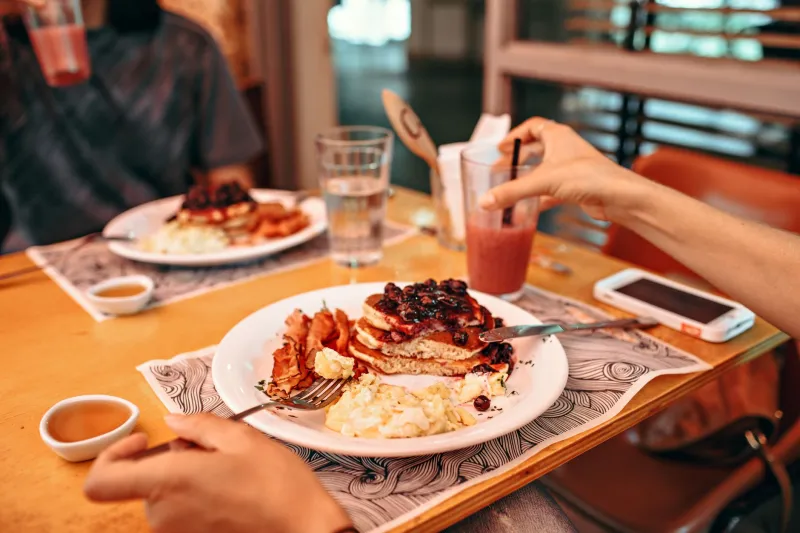
Walk into any diner in America — the kind with laminated menus, counter stools that spin, and a coffee pot that never seems to empty — and you'll witness something quietly remarkable. A room full of strangers, each one ordering with a certainty they rarely apply to other decisions in their lives. No deliberating, no second-guessing. Just: Two eggs over easy, wheat toast, home fries. Coffee, black.
There's a reason that order comes out so fast. You've been practicing it your whole life.
The American diner breakfast is one of the most underappreciated cultural artifacts we have. It's a meal that sits at the intersection of memory and ritual, geography and personality — and it's been doing that work quietly, reliably, for over a hundred years. We should probably talk about it.
A Very Brief, Very American History
The diner as we know it has roots in the late 19th century, when horse-drawn lunch wagons began feeding factory workers and night-shift laborers in New England. By the early 20th century, those wagons had evolved into stationary, prefabricated structures — streamlined, efficient, and designed to serve a lot of people quickly. The format spread fast, especially in the Northeast and Midwest, where industrial towns needed feeding.
The golden age of the American diner ran roughly from the 1940s through the 1960s, and the breakfast menu that crystallized during that era is essentially the one we still order from today. Eggs cooked to order. Bacon or sausage. Toast. Pancakes or waffles. Hash browns or home fries. Orange juice and, always, coffee.
What's striking is how little it's changed. In an era of avocado toast and overnight oats, the diner breakfast has remained stubbornly, magnificently itself. That's not nostalgia talking — that's staying power.
Your Order as a Self-Portrait
Here's where it gets interesting. The diner breakfast, more than almost any other meal, tends to be deeply personal and largely fixed. Most people settle on their order sometime in childhood or early adulthood and then order some version of it for the rest of their lives. It's comfort food in the truest sense — not just food that comforts, but food that confirms.
The eggs-over-easy person tends to be a purist. They know what they want, they want it done right, and they will send it back if the yolk is broken. They probably drink their coffee black and have strong opinions about toast-to-egg ratios.
The pancake devotee is an optimist. They are ordering dessert at 8 AM and doing it without apology. They almost certainly pour the syrup in a slow, deliberate spiral and believe — correctly — that the first pancake off the griddle always belongs to the cook.
The scrambled-eggs-with-everything person is a pragmatist and a connector. They're using the eggs as a vehicle for cheese, vegetables, and whatever else the kitchen will throw in. They're probably also the one at the table who orders for everyone.
The waffle loyalist is quietly competitive. They know the waffle is superior to the pancake in both structural integrity and syrup-holding capacity, and they don't feel the need to argue about it because the waffle speaks for itself.
None of this is scientific. All of it feels true.
Regional Rituals Worth Knowing
The diner breakfast isn't monolithic — it shifts and bends depending on where you are in the country, and those regional variations are worth celebrating.
In the South, a proper diner breakfast often includes a biscuit so tall and flaky it barely holds together, served with sausage gravy or a pat of butter that melts on contact. Grits replace the hash browns, and if you order them wrong (read: without butter and salt), the cook will judge you silently and correctly.
In New York and New Jersey, the diner is practically a civic institution. The coffee comes in thick ceramic mugs and arrives before you've even opened the menu. The everything bagel with lox and cream cheese sits comfortably alongside the egg-and-cheese on a roll, which is its own perfect, portable masterpiece.
In the Pacific Northwest, you'll find diner menus that have quietly incorporated smoked salmon scrambles and locally sourced mushrooms without making a big fuss about it. The coffee is excellent. This is not a coincidence.
In the Midwest, the portions are generous to the point of being a statement. The toast comes in thick slices. The orange juice is fresh-squeezed or it's not mentioned. The pie, always the pie, is available at breakfast and you should order it.
Why It Still Matters
There's a cultural conversation happening right now about elevating everyday food — about treating simple meals with the same attention and intention we'd give to a special-occasion dinner. The diner breakfast deserves that conversation.
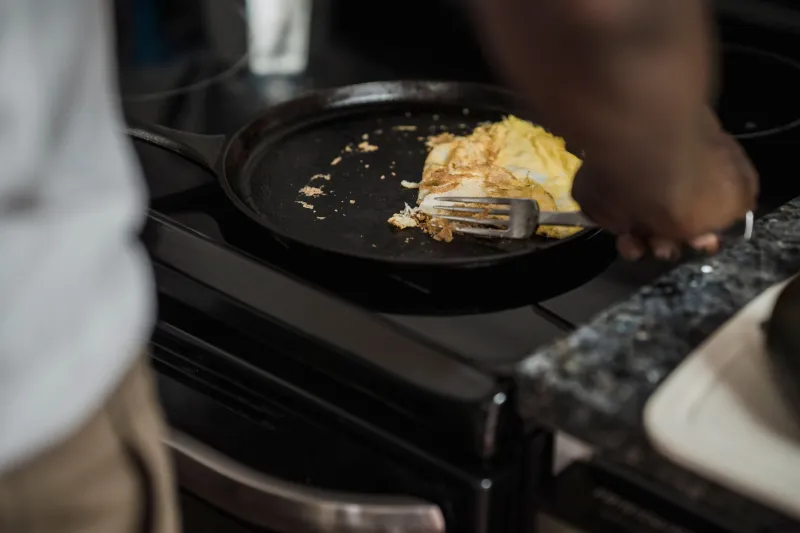
Think about what it actually takes to nail a perfect over-easy egg: the right pan temperature, the right amount of fat, the confidence to flip at exactly the right moment. Or consider the geometry of a well-stacked pancake — the batter rested just long enough, the griddle seasoned and at the right heat, each cake flipped once and only once. These are skills. They deserve respect.
Recreating your diner order at home isn't about replacing the diner — nothing replaces the diner. It's about honoring the meal enough to understand what makes it great.
Bring It Home: A Few Elevated Twists
If you want to take your personal diner order to the next level at home, here are a few starting points:
For the over-easy loyalist: Try cooking your eggs in brown butter instead of plain oil. The nuttiness adds a depth that pairs beautifully with a squeeze of hot sauce and thick sourdough toast.
For the pancake devotee: Rest your batter for at least ten minutes before cooking — it allows the gluten to relax and the leavening to activate, resulting in a fluffier, more even pancake. Add a splash of vanilla and a pinch of nutmeg to the batter. You'll notice the difference.
For the scrambled-egg enthusiast: Low and slow is the move. Pull the pan off the heat before the eggs look fully done — they'll finish cooking from residual heat and stay creamy rather than rubbery. Fold in a small spoonful of crème fraîche at the end if you want to feel fancy about it.
For the waffle loyalist: Separate your eggs and whip the whites to soft peaks before folding them into the batter. The result is a waffle with serious lift and a crunch that holds up under syrup.
And whatever you order — whatever your ritual, your regional loyalty, your deeply held toast preferences — pour yourself a real cup of coffee first. Sit down. Let the morning be the morning.
The diner taught us that. It's been right all along.