The One Coffee Tool That's Been Under Your Nose the Whole Time
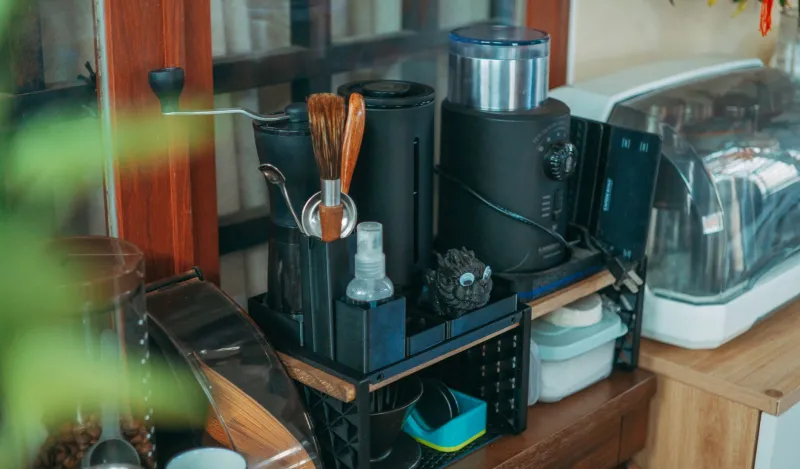
Ask most coffee drinkers what equipment they'd upgrade first and they'll tell you the same thing: the machine. Get a better espresso maker. Get a proper pour-over setup. Get a gooseneck kettle. And look, none of that is bad advice — good equipment matters. But there's a strong case to be made that the single most impactful tool in your coffee setup isn't the machine at all. It's the grinder. Specifically, the grinder you probably haven't cleaned since you bought it, that lives in the back corner of your counter, that you ignore entirely until you run out of pre-ground and suddenly need it on a Tuesday morning.
That grinder is quietly determining the quality of every cup you make. And most people have no idea.
Why Grinding Is Everything
Coffee is a matter of chemistry, and grinding is where that chemistry begins. When you grind beans, you're breaking them open and exposing their surface area to water. The size of those grounds — and how consistently uniform they are — controls how much flavor the water extracts, how quickly, and at what rate.
Grind too coarse and the water rushes through without pulling enough flavor. Your coffee tastes thin, weak, and vaguely sour. Grind too fine and the water struggles to move through, over-extracting bitter compounds. Your coffee tastes harsh and flat. Grind inconsistently — which is what most cheap blade grinders do — and you get a mix of both problems in the same cup. Some grounds are too fine, some too coarse, and the result is a muddled brew that can't quite decide what it wants to be.
This is why people spend years chasing the perfect beans or the perfect water temperature, only to find their cup still isn't quite right. The grinder was the missing variable the whole time.
Blade vs. Burr: The Conversation Worth Having
Most entry-level grinders use a spinning blade — similar to a small food processor blade — that chops beans into uneven pieces. They're cheap, they're common, and they're the primary reason a lot of home coffee tastes inconsistent. The blade doesn't grind; it pulverizes randomly. You get dust mixed with chunks, and there's no real way to control the outcome.
Burr grinders work differently. Instead of a blade, they use two abrasive surfaces — the burrs — that crush beans between them at a controlled distance. The gap between the burrs determines the grind size, and because every bean passes through the same gap, the resulting grounds are remarkably uniform. That uniformity is what allows water to extract flavor evenly, which is what produces a balanced, consistent cup.
Burr grinders come in two varieties: flat burr and conical burr. Flat burrs tend to produce very consistent grounds and are common in higher-end commercial machines. Conical burrs are slightly more forgiving, generate less heat during grinding (which matters for flavor preservation), and are the standard in most quality home grinders. For everyday home use, a conical burr grinder is the practical choice.
What to Actually Look For
You don't have to spend a fortune to get a meaningfully better grinder. The market has genuinely good options at multiple price points, and knowing what to look for helps you spend wisely.
Grind settings matter. Look for a grinder with a wide range of settings — ideally at least a dozen distinct steps, and more if you're brewing multiple ways (espresso requires a much finer grind than French press). The more granular the control, the more you can dial in your specific brew method.
Motor speed affects flavor. Slower motors generate less heat, which preserves the volatile aromatic compounds in freshly ground coffee. This is a detail that mostly matters at higher quality levels, but it's worth knowing.
Grind retention is a real issue. Some grinders hold onto a significant amount of grounds inside the mechanism after grinding. If you're grinding small quantities or switching between coffee types, this can throw off your measurements and introduce stale grounds into fresh batches. Look for grinders marketed as low-retention if this matters to you.
Capacity. If you're making coffee for one, a small hopper is fine. If you're grinding for a household or doing batch brewing, you'll want something that can handle more beans without constant refilling.
For most home brewers, a quality conical burr grinder in the $60–$150 range is a genuine game-changer without being an unreasonable investment. Brands like Baratza, OXO, and Fellow have solid options in that window that will meaningfully outperform any blade grinder.
The Morning Ritual Angle
Here's something that doesn't get talked about enough: the grinder changes the experience of making coffee, not just the taste of it.
Grinding beans fresh every morning takes maybe 30 extra seconds. But those 30 seconds have a sensory quality that pre-ground coffee just can't replicate. The smell of freshly cracked beans is genuinely one of the better smells a kitchen can produce — rich, complex, a little floral depending on the roast — and it signals the start of something intentional. You're not just pressing a button. You're doing something small but deliberate at the beginning of your day.
There's a reason coffee rituals feel meaningful to the people who have them. It's not about the caffeine. It's about the sequence of small, sensory actions that create a moment of presence before the rest of the day takes over. The grinder is part of that sequence. A good one makes the ritual feel more considered, more connected to the actual craft of making a good cup.
Maintenance: The Part Everyone Skips
A grinder you never clean is a grinder that's slowly poisoning your coffee with rancid oil buildup. Coffee beans contain natural oils, and those oils accumulate on burrs and inside the grinding chamber over time. They go stale. They turn bitter. And they flavor every subsequent cup in ways you might be attributing to your beans or your water or your technique.
Cleaning a burr grinder doesn't have to be complicated. A dry brush (most grinders come with one, or you can use a cheap pastry brush) run through the chamber weekly removes most loose grounds. A monthly deeper clean — disassembling the burrs if your model allows it, brushing thoroughly, and reassembling — keeps things running cleanly. Products like Grindz tablets are designed specifically for grinder cleaning and work well if you want a low-effort option.
The point is simply: clean it. Regularly. It takes five minutes and it makes a real difference.
Start Here
If you're serious about improving your morning coffee and you haven't upgraded your grinder yet, that's your next move. Before the new machine. Before the specialty beans. Before the filtered water setup. Get a quality burr grinder, grind fresh every morning, and taste the difference before you spend money on anything else.
The machine gets all the attention. But the grinder is doing the work.