Your Counter Is Talking — Here's How to Make It Say Something Worth Hearing
Your Counter Is Talking — Here's How to Make It Say Something Worth Hearing
Walk into your kitchen right now. Not to grab something — just to look. What does the counter say to you?
If the answer is "overwhelmed," or "where did I even put the coffee scoop," you're not alone. Most American home kitchens are working kitchens, which means the counter becomes a landing zone for everything from mail to mystery gadgets still in the box. But here's the thing: the way your kitchen looks directly shapes how often you actually use it — and how much you enjoy the time you spend there.
At Ada's Kitchen & Coffee, we believe a kitchen isn't just a room. It's the place where your morning ritual lives, where Sunday dinners start, where the smell of fresh coffee becomes the signal that the day has officially begun. Your counter deserves to reflect that.
Let's talk about how to make it happen.
Start With the "Keep It Out" Test
The first instinct most people have when styling a kitchen is to clear everything off. And while a blank slate feels satisfying for about forty-five minutes, it's not realistic — and honestly, it's not even the goal.
Instead of asking "what should I hide?" ask yourself: "what do I reach for every single day?"
For most home cooks, that list looks something like this: coffee maker, a good knife, olive oil, salt, maybe a cutting board. Those things earn their spot on the counter. Everything else — the panini press you use twice a year, the blender you bought for a smoothie phase — can live in a cabinet.
Once you've narrowed it down to your true daily essentials, you have the bones of a counter that works for you instead of against you.
Build a Coffee Station That Feels Like a Ritual
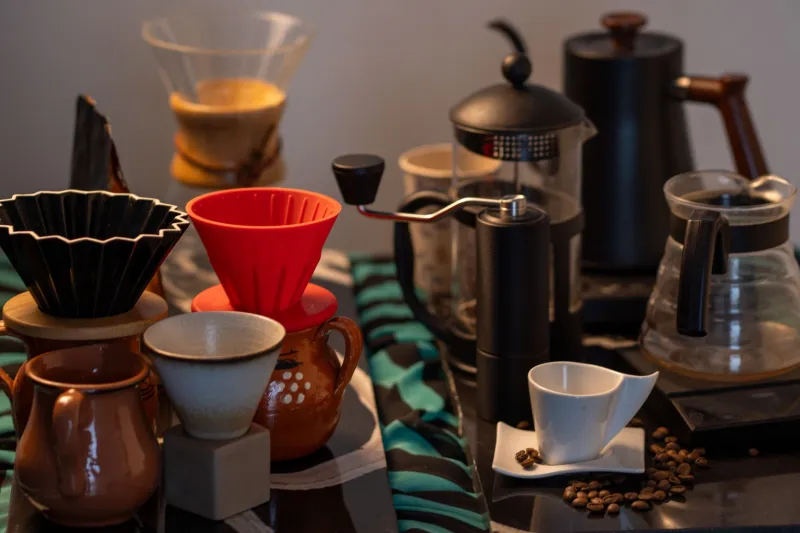
If you're a coffee person — and if you're here, we're guessing you are — your coffee station deserves its own dedicated zone. Not just a corner where the machine happens to sit, but an intentional little world.
Grouping everything together is the first move. French press, grinder, a small canister of beans, your favorite mug. When it all lives in one spot, making coffee stops feeling like a chore and starts feeling like the thing you actually look forward to.
From there, it's about adding one or two elements that make the space feel personal rather than purely functional. A small ceramic dish for your measuring spoon. A tiny potted plant — rosemary works beautifully and smells incredible near a coffee setup. A handwritten index card with your go-to brew ratio tucked against the wall. None of these things cost much. All of them change how the space feels.
Height matters too. If your counter allows it, consider a small wooden riser or a vintage tray to elevate part of the display. Varying heights give the eye somewhere to travel and make even a modest collection of objects look considered rather than just stacked.
The Living Ingredient Rule
Here's a styling tip that pulls double duty: keep at least one living thing on your counter.
Fresh herbs in a small glass of water — basil, parsley, a sprig of thyme — do something no decorative object can. They signal that this kitchen is active. That someone is cooking here, using real ingredients, paying attention. And practically speaking, herbs within arm's reach actually get used. Tuck them in a cabinet and they're forgotten by Tuesday.
A small pot of mint near the sink, a bundle of rosemary in a bud vase, a few sprigs of whatever looked good at the farmers market this weekend — these are the details that make a kitchen feel genuinely alive.
If plants aren't your thing, a bowl of seasonal fruit accomplishes something similar. A pile of lemons in a wide ceramic bowl is one of the most timeless, effortlessly stylish things you can put on a counter. It's also just useful.
Think in Zones, Not Objects
One of the most common counter styling mistakes is treating every inch of space the same way. Instead, think in zones.
You might have a prep zone near your primary cutting area — that's where the knife block, a small board, and your salt cellar live. A coffee zone anchors one end of the counter. A "beauty zone" (yes, this is a real thing, and yes, it matters) holds the items that are as much about joy as function: a cookbook propped open, a candle, that ceramic pitcher your aunt brought back from a trip to New Mexico.
Zones create visual rhythm. They tell the eye where to rest. And they make it much easier to keep things tidy because everything has a logical home.
Color, Texture, and the Stuff No One Talks About
You don't need to renovate your kitchen to make it feel more intentional. A few texture and color choices go a long way.
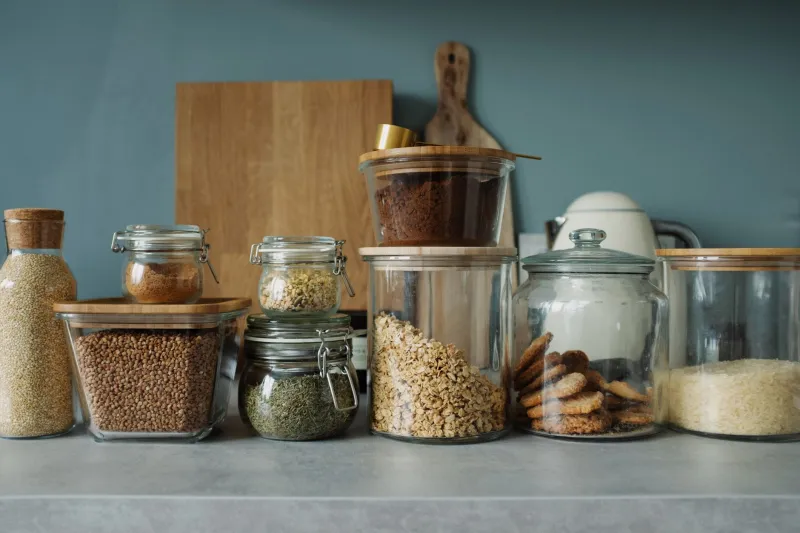
Wood tones warm up almost any counter. A wooden cutting board leaned against the backsplash (rather than lying flat) reads as a styling choice, not just a tool. Linen dish towels folded casually near the sink add softness. A matte ceramic mug sitting next to a gleaming stainless machine creates the kind of contrast that makes both objects look more interesting.
If your kitchen leans neutral — white cabinets, gray counters, the classic American setup — a single pop of color can anchor the whole space. A cobalt blue bowl. A terracotta planter. A bright red kettle. One intentional color choice reads as style. Three different ones read as clutter.
The Permission You Didn't Know You Needed
Here's the part of the article where we say something that might feel obvious but apparently needs to be said: your kitchen is allowed to look like you.
Not like a showroom. Not like a Pinterest board curated by someone with a kitchen three times the size of yours. Like the person who actually cooks in it, drinks coffee in it, feeds people in it.
The French press you've had since college. The mismatched mugs that somehow all mean something. The little dish where you always drop your rings before you wash vegetables. These things aren't clutter — they're character.
Style your counter to make you want to show up in the kitchen every morning. That's the whole goal. Everything else is just details.