Cast Iron or Nonstick? We Tested Both in a Real Home Kitchen So You Don't Have to Guess Anymore
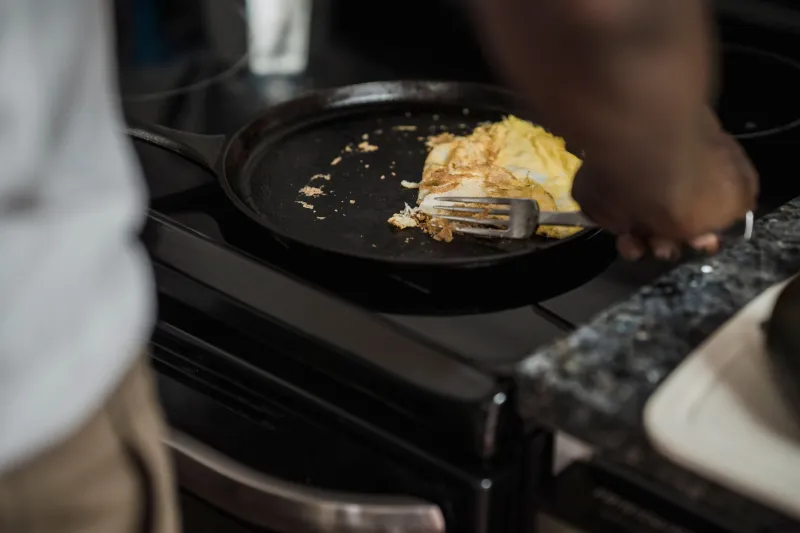
Cast Iron or Nonstick? We Tested Both in a Real Home Kitchen So You Don't Have to Guess Anymore
Walk into any cookware aisle at a Target or Williams Sonoma, and you'll find two very different philosophies sitting side by side. On one end, the cast iron skillet — heavy, black, practically indestructible, and carrying the weight of generations of American cooking. On the other, the sleek nonstick pan — lightweight, easy to clean, and designed for the kind of low-drama cooking that fits into a busy weeknight.
Both camps have passionate defenders. Your grandmother swore by her Lodge skillet. Your college roommate refused to cook eggs in anything else but a nonstick. And somewhere in the middle, the rest of us are just trying to figure out which one actually belongs in our kitchen.
At Ada's Kitchen, we believe the right tool makes cooking more joyful — not more stressful. So let's settle this properly.
First, What Are We Actually Comparing?
Before we get competitive about it, it's worth being honest: cast iron and nonstick aren't really trying to do the same job. They're built differently, they behave differently, and they excel in different situations. The goal isn't to crown one absolute winner — it's to figure out which one wins for you, in your kitchen.
Cast iron is exactly what it sounds like: a pan molded from a single piece of iron. It's dense, it holds heat exceptionally well, and when properly seasoned (more on that in a moment), it develops a naturally slick cooking surface that only improves with age. A well-maintained cast iron pan can legitimately last a hundred years.
Nonstick pans, by contrast, are typically made from aluminum with a polymer coating — most commonly PTFE, which you might know by the brand name Teflon. That coating is what gives them their signature slide-everything-off quality. They're lighter, easier to manage, and require almost no learning curve.
The Sear Test: Steaks and Proteins
This one isn't even close. Cast iron wins decisively.
A proper sear requires high, sustained heat and a surface that won't buckle under pressure. Cast iron delivers both. Because it retains heat so effectively, it doesn't cool down when you drop a cold steak onto it — which is exactly what you need for that deep, caramelized crust that makes a home-cooked steak feel like something from a steakhouse.
Nonstick pans, on the other hand, are not designed for high heat. Most manufacturers actually recommend keeping nonstick pans below 500°F, and the coating can degrade — and potentially release fumes — if overheated. You can technically sear a steak in a nonstick, but you'll get a pale, steamed result rather than a proper crust. It's just not what the pan is built for.
Bottom line: If you cook proteins regularly and care about getting a real sear, a cast iron skillet is non-negotiable.
The Egg Test: Scrambled, Fried, and Delicate
Here's where nonstick earns its keep. Nonstick wins for eggs.
Scrambled eggs are unforgiving. They cook fast, they stick to almost everything, and cleaning a pan with burnt egg residue is nobody's idea of a good morning. A good nonstick pan makes scrambled eggs a genuinely low-effort task — they slide around freely, cook evenly, and leave the pan nearly spotless.
Cast iron can absolutely cook eggs, but it requires a well-seasoned surface, the right amount of butter or oil, and a little patience. It's doable, and plenty of cast iron devotees cook eggs in their skillets every day. But there's a learning curve, and for someone who just wants a quick, stress-free breakfast, nonstick is simply more forgiving.
Bottom line: For eggs and other delicate foods — fish fillets, crepes, omelets — nonstick is the more practical everyday choice.
The Cornbread Test: Oven Baking
This one has a clear cultural answer, and it's cast iron all the way. If you've ever had Southern-style skillet cornbread with that crackling, golden crust on the bottom, you already know why.
The trick is preheating your cast iron in the oven before adding the batter. The hot surface immediately starts forming that crust the moment the batter hits, creating a texture you simply cannot replicate in a nonstick pan. Cast iron also goes from stovetop to oven seamlessly, which opens up a whole category of cooking — frittatas, skillet cookies, pan pizzas — that nonstick pans can't always handle safely.
Bottom line: For baking and oven-to-table cooking, cast iron is the superior tool.
The Sauté Test: Vegetables and Quick Weeknight Meals
This one's genuinely a toss-up, and it depends on what you're making.
For high-heat vegetable sautéing — think blistered green beans, caramelized mushrooms, or charred corn — cast iron gives you better browning and a more complex flavor. For lower-heat, quick-cook vegetables where sticking is a concern — zucchini, spinach, cherry tomatoes — nonstick is easier and faster to clean up afterward.
Bottom line: Keep both in rotation if you can. If you can only have one, think about what you cook most often.
Let's Bust a Few Myths
"Cast iron is impossible to maintain." Not true. Seasoning a cast iron pan just means rubbing it with a thin layer of oil and baking it in the oven. Do it occasionally, dry it thoroughly after washing, and your pan will take care of itself. You don't need to baby it — you just need to respect it.
"Nonstick is dangerous." Older nonstick coatings contained PFOA, a chemical that raised legitimate health concerns. Most modern nonstick pans are PFOA-free and safe for normal home cooking use. Just don't overheat them, don't use metal utensils on the surface, and replace them when the coating starts to visibly degrade.
"You can't wash cast iron with soap." This one's outdated. A small amount of mild dish soap won't destroy your seasoning. What you should avoid is soaking it in water or putting it in the dishwasher.
So Which Pan Actually Wins?
Here's our honest take:
Choose cast iron if you love cooking proteins, you bake in your pans, you want a piece of cookware that genuinely improves over time, or you have a gas or induction stovetop where high-heat cooking is the norm. Cast iron rewards cooks who are willing to learn its quirks, and it pays that back tenfold in flavor and longevity.
Choose nonstick if your mornings are hectic, you cook a lot of eggs or fish, you live alone or cook for one or two people, or you're newer to cooking and want fewer variables to manage. There's no shame in prioritizing ease — that's a legitimate kitchen value.
And honestly? The best-equipped home kitchen has both. A 10- or 12-inch cast iron skillet and a quality 10-inch nonstick pan cover almost every cooking scenario you'll encounter. Together, they cost less than most single premium cookware pieces, and they handle the full range of what a real home cook actually does.
At Ada's Kitchen, we believe cooking should feel good — not like a test you might fail. Pick the pan that makes you want to cook more, and you've already made the right choice.